How to Get a Liar to Tell the Truth
By now, you've met my man Redding. Nathaniel Redding, the NYC homicide detective from Courtesy of a Dead Man. Our girl Lanie had already done a profile piece on him before the Grayson murder case. Then she decided to do another: she'd get the man to explain how he sizes up suspects.
Last time they talked, he told her what he doesn't do. Which, for a man of his particular talents, turned out to be quite a list.
What he does? Well. That's what he kept back.
Lanie's been after that ever since. Two weeks of trying to get hold of a man who, apparently, studied evasion before he studied detection. Her luck just changed.
***
From the Archives of Lanie Price: A Homicide Detective Shares His Secrets
Lena Redding is precise about what she offers, selective about the invitations she extends. When she rings, I always take the call.
“You’ve been wanting to see him, Lanie. To finish that last conversation. Well, he’s ready to talk now. In fact, I think he needs to. There are certain things he won’t share with me, but he’d share them with you. Certain things, he says he just won’t let in our door.”
Which is why, on a gray Thursday afternoon, I was at the West 135th Street station with a notepad I didn't open for the first hour.
Redding was at his desk, jacket off, a file closed in front of him. His tie, normally crisp and perfectly tightened, hung loose. It had been two weeks since I’d seen him and I swear he’d lost weight and there were new dark circles under his eyes.
He took one look at me and gave a knowing smile. “Lena sent you, didn’t she?” Then he waved his own question away. “Go on. Sit down.” He poured me coffee from a pot of black brew that had no doubt been sitting too long and plopped it down in front of me. Then he sat behind his desk. “So what do you want to know?”
I wanted to know why Lena had said what she said about him needing to talk, but I knew better than to start with it. Furthermore, I really did want to pick up where we’d left off the last time we’d talked, before he’d gotten that call that sent him off into the night. So I repeated the question he hadn't answered.
“What do you do then? If the guilty won’t break and the innocent do?”
Redding took a sip of his coffee. “I look for the story.”
“What story?”
“The one the suspect tells himself.”
“You mean his alibi?”
“No. An alibi is for me. I mean the story he keeps for himself. The one that lets him get up in the morning, shave, eat breakfast, walk down the street like any other man.”
I thought about that for a moment. “So you’re not looking for guilt.”
“I’m looking for the version of himself he’s trying to protect.”
“The loving husband.”
“Could be.”
“The loyal friend.”
“Could be.”
“The victim.”
“Often.”
“The hero.”
“More often than you’d think.”
“And once you know the story?”
“I don’t argue with it. Not at first. A man will give up facts quicker than he’ll give up who he thinks he is.”
“That sounds dangerous.”
“It is. You can start believing his story right along with him if you’re not careful.”
“So what do you do?”
“I let him tell it.”
“As a confession?”
“No. Most men won’t confess. Not at first. But they’ll explain.”
“Explain what?”
“Why a reasonable man might’ve done what he did.”
“A ‘reasonable’ man?”
“That’s usually the part that matters.”
He set the cup down. “You ask a man, ‘Did you kill her?’ He’ll say no. Ask him why another man might’ve done it and he’ll talk for twenty minutes. He’ll tell you she shamed him. Lied to him. Took what was his. Threatened his kids. Laughed when he begged. He’ll tell you all the things he won’t admit he felt.”
“And you let him.”
“I let him build the room. Then I see where he puts the furniture.”
I was skeptical. “You make it sound easy.”
“It isn’t. You have to know the difference between listening and agreeing. Between understanding and excusing.”
“Those are fine distinctions—some would say none at all.”
“Those would be the same people who do it wrong. They think you’re talking about patting a killer on the hand and telling him any man would’ve done the same. Making him feel decent while he’s giving himself away.”
“And you don’t?”
“No. I’m not there to save his soul. I’m there to find out what happened.”
“But you do try to understand him.”
“I try to understand the lie he needs most.”
“That’s a cold answer.”
“It’s a cold job.”
Rain worried the precinct windows. Outside, tires hissed over wet pavement. Somewhere in the building, a man laughed too loudly and another told him to shut up.
I checked my notes. “Last time, you said you almost never show suspects pictures of the scene. Of where it happened. Or how the victim looked when the killer was done.”
“That’s right.”
“What about objects?”
He didn’t answer. A pencil lay on his desk. He touched it once, then left it alone.
I waited.
He looked at the closed file in front of him.
There it was. The pause he himself had mentioned in our last talk—the one that says you’ve hit a nerve.
“What kind of objects?” he asked.
“Things from the scene. That belonged to the victim.”
His gaze went to the window, then edged back to me. “So you know I’ve been working this case, right?”
“I know you’ve been working a case—or rather, that it’s been working you. I heard that from Lena.”
“Nothing else?”
I shook my head. “She’s discreet, your wife.”
A ghost of a smile. “Yes, that she is.”
I said nothing.
He tapped the file on his desk with an index finger. “It started with that phone call—the one I got when you were over to our place.”
I inclined my head, waiting. He went on.
“A child. Nine years old. Went missing from her block. Her mother thought she was with a cousin. The cousin thought she’d gone home. By supper, everyone knew different.”
I remembered seeing a brief item in the Amsterdam News. A little girl. A family on West 134th Street. A pastor asking anyone with information to come forward.
“We found her. What was left of her. Last night.”
The rain struck harder against the glass.
I’d read those two paragraphs in the Amsterdam News twice. Had told myself the disappearance didn’t have to signal a crime. That I couldn’t cover every crime in Harlem. That, in fact, I wasn’t supposed to be covering any. I was a society reporter. Crime and disappearances were not my beat. There was nothing I could do. Not for the child or her family.
All of that was true. None of it was why I looked away. Fact was, I couldn't bear to think about the worst thing happening. Didn't want to remember the cases I'd covered where it had.
So instead of reaching out to the family, doing a follow-up piece, I’d said a prayer for them, then turned the page. I would not think about this one. It was not my story.
That’s what I’d told myself.
We found her. What was left of her. Last night.
“Where was she?”
“St. Nicholas Park.”
That made a sick kind of sense. The park ran north along the western edge of St. Nicholas Avenue, from West 128th Street on up to 141st. She didn't have to be taken far. The distance between where she lived and where she was found was almost nothing.
The park’s terrain — the rocky slopes, the heavy tree cover — suggested concealment rather than disposal. Whoever did this knew the park, or at least knew it well enough to find its darker corners. He didn't take her across Harlem. He took her around the corner.
That was its own kind of horror.
For Redding, there was another. He’d found that child almost in the shadow of his own precinct. St. Nicholas was right there — he could see it from his bullpen window.
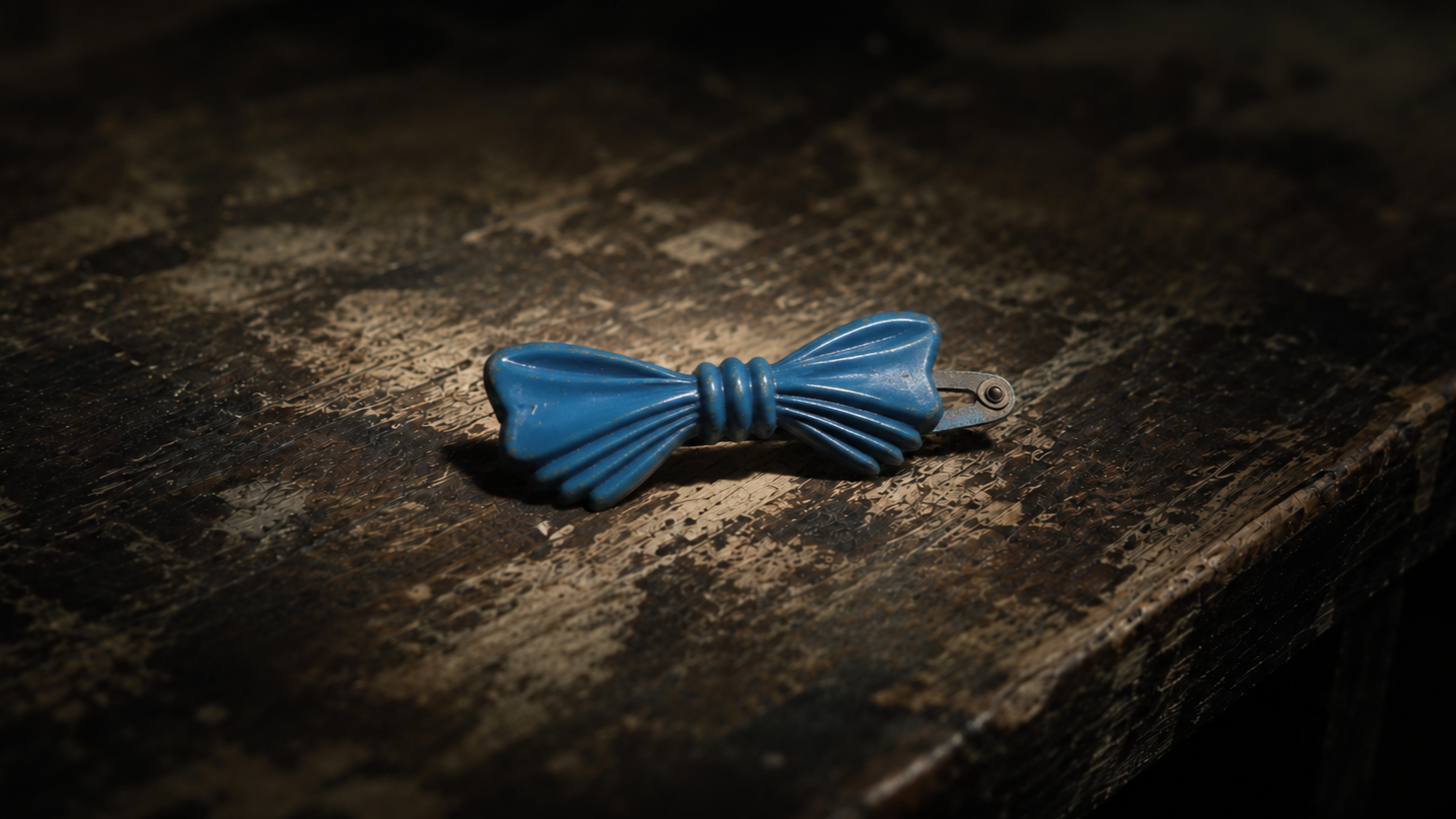
"She was still wearing her hair barrette when we found her. Mother said it was the child's favorite, that she'd worn it that day. Small. Blue. Shaped like a bow. You could tell she'd struggled. That the barrette must've fallen off while—"
He paused. Took a moment, then cleared his throat. “It was bent in the middle. Still had two strands of hair caught in the clasp.”
The precinct seemed to recede.
“Any idea who did it?”
“Oh, yeah. He’s behind bars right now.”
“That fast?”
“That fast.”
I stared at Redding, had a feeling I knew where this was headed. I’d seen too many cases not to—
“How’d you handle it?”
“I brought him in. Set him down. Put the barrette on the table between us."
"You asked him about it?"
"No."
“You just put it there?”
“Yes.”
“How long did it take?”
“Not long.”
“What did he do?”
“He stared at it like it might burn him. Finally, he picked it up. Turned it over. And then he put his head down and his shoulders started to go."
Redding’s hand closed, slowly.
“He said she loved that barrette. That she’d always insisted on wearing it, thought it made her look ‘extra pretty.’ But he’d always told her she didn’t need anything extra to make her pretty. That in his eyes, she was pretty enough.”
Redding looked at me then. “That was the first true thing he’d said all day.”
And the ugliest.
“What was the story he’d been protecting?”
“That he loved her.”
That didn’t surprise me. Experience had taught me that people are more likely to die at the hands of those who love them than of those who don’t. “Makes perfect sense. In a perfectly twisted way.”
“To you, maybe, you being a reporter. But it doesn’t to most people.”
“Or maybe it does,” I said. “Maybe, they just don’t want to admit it ‘cause it makes them uneasy.”
“It makes them worry. About the neighbor next door, the person sleeping down the hall, or even sleeping next to them. People,” he said, “want murder to cancel everything that came before it. It doesn’t. A killer can love his victim and still destroy her. He can be sick, angry, ashamed, frightened, weak, mean as hell and still call it love. That’s why you don’t chase the emotion. Emotions lie worse than people do.”
"And yet you did. You chased the emotion. You used the barrette to break him."
“I did. And I’d do it again. The barrette proved there were two stories. The one he was telling me and the one he knew in his bones. Once he held it, he couldn’t keep them apart.”
“And then?”
“He gave me … everything.”
That one word. Everything. The way Redding said it. I knew he’d heard more details than he ever wanted to hear.
“Her father.” I sighed and shook my head. “How did you know it was him? Was it just because the parents always top the list? Followed by trusted friends and relatives?”
“It was more than that. Even if he wasn’t her daddy, I would’ve taken a hard look at him.”
“Why?”
“He kept coming in. First time, he was what you’d expect. Wild with questions. Angry at us. Angry at the neighbors. Angry at God.”
“And the second time?”
"Still desperate. But differently."
"How so?"
"Frightened people ask about the thing they fear."
"And he didn't?"
"He did.”
“Explain.”
“The mother wanted her daughter back. When she called or came by, she wanted to know if we'd found her. She fretted about whether her baby had eaten. If she was cold. If she was frightened."
"And the father?"
"He wanted to know what we knew.”
"In other words..."
"What he feared was me."
A radiator hissed.
I drew back. It was the look in his eyes when he said that. I knew this man. I’d had dinner at his table. Seen how Lena kissed the top of his head. But in that split second, I caught a glimpse of what his suspects saw—and I was glad I wasn’t the man he was describing.
I swallowed. “Couldn't an innocent man fear you, too?”
"Of course."
"Then what made this different?"
"An innocent man worries I'll get it wrong. A guilty one worries I'll get it right."
That landed. My mind turned to the too-helpful sources I’d had over the years, the ones who’d only been interested in steering what I wrote, steering it away from them.
Outside, a patrol wagon rattled past the station.
“So what did you do? Because suspicion isn’t evidence.”
“I told him we’d gotten a tip. Someone had seen her with the man who took her.”
“Had you?”
Redding gave a look that said, What do you think?
“So you lied?” I cocked an eyebrow. “Last week, you said you didn’t do that.”
“No, I said I was careful with it. Never tell a lie your suspect knows for a fact isn’t true.”
“So you were fishing.”
“Testing. But I was doing more than that.”
“Let me guess. You were setting a trap.”
“Had to. Evidence has to start somewhere. If you can get your perp to make a mistake and create it for you, all the better.”
“Did it work?”
He was silent. His gaze went to the window and the darkness beyond it. “Turns out, it didn’t have to.”
"Because of the barrette."
"Because of the barrette."
Somewhere, deep in the building, a heavy door slammed.
***
A confession triggered by a single piece of physical evidence. Sounds far-fetched. But is it? When you think about all the grief and guilt that man must've been carrying. That barrette wasn't just evidence. It was his baby girl herself. A silent accusation. Faced with it, he couldn't keep up the illusion, the story he'd been telling himself.
That lost little girl had the last word this time.
Then there's Redding. The man who doesn't use fear. Who doesn't break people. Who instead gets them to break themselves. I'd say it's a bad idea to lie to him.
Lanie went in looking for technique. She came out with insight into her own thinking, as well as his. A side of him that almost made her feel sorry for the unfortunate soul who gets caught in his sights.
Almost.
See you next time.
Signing off,
—Walker