Old Folks Behaving Badly
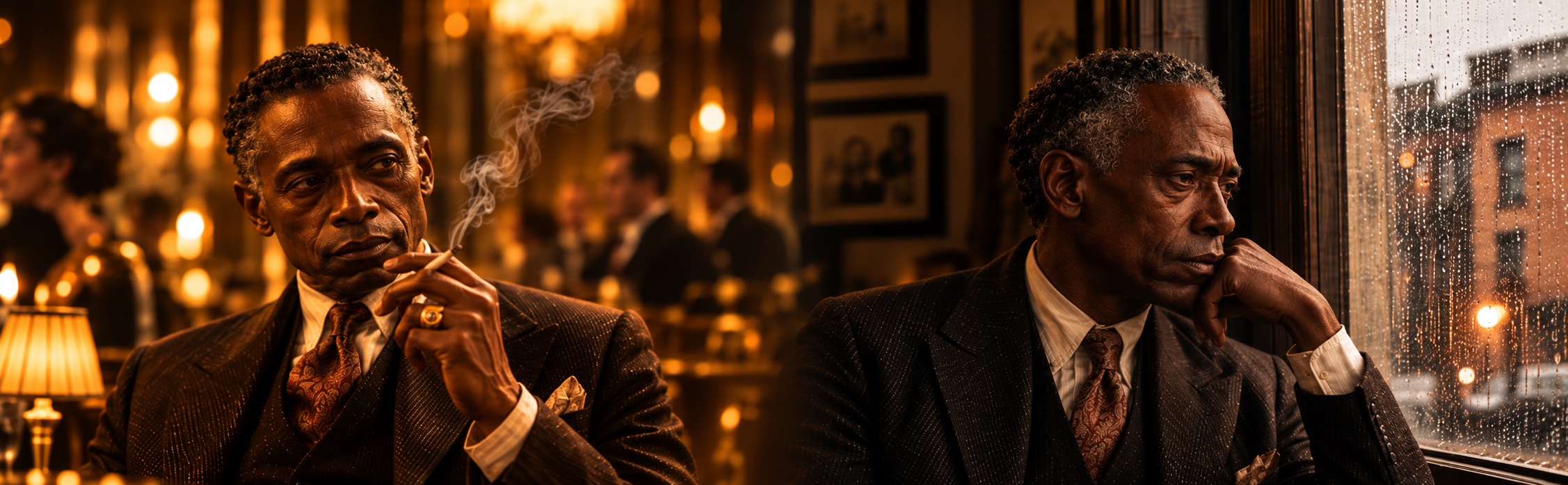
Everett Carlisle, before and after: Paris, when the dream still held. New York, when hope was all he had left.
So, I was double-checking the chronology of Courtesy of a Dead Man the other day and it dawned on me that the characters are older than I thought they were. I’d actually written a book about sixty-somethings. Not forty- or even fifty-somethings, but sixty-somethings. Boomer’s Delight. Who’s going to buy a book like that? Sigh.
On the other hand, one could argue that this may be one of the book’s secret strengths. At least, one could try to argue it.
Victor Grayson and Everett Carlisle aren’t old men sitting around dispensing wisdom from upholstered chairs. They’re still ambitious, sexual, jealous, vain, frightened, professionally hungry, secretive and capable of making spectacularly bad decisions. Grayson is still protecting his career. Carlisle is still trying to claw his way back into the literary world.
And Beatrice Vaughn is still organizing her life around the man she loves. Their past isn’t safely behind them. It is actively reaching into the present and wrecking things.
Their ages actually make the story hurt more.
Carlisle hasn’t lost ten or fifteen years because of Grayson. He has lost three decades. He’s knocking on sixty’s door when he comes back from Paris still trying to get published, still trying to recover a professional life, still trying to make sense of what happened between him and Grayson way back when.
That’s much more poignant than a forty-year-old saying, “Well, my career hasn’t worked out.”
Grayson is even more interesting at sixty-five. McAllister isn’t a stepping-stone. It’s almost his entire adult life. He’s spent thirty-plus years building himself into Professor Victor Grayson. So when the institution begins questioning his integrity, it isn’t threatening his next promotion. It’s threatening the meaning of his whole life.
And Vaughn’s twenty-five years with him now has the right scale, too. She hasn’t been nursing a crush for a few years. She’s given him the great middle stretch of her adulthood.
So maybe it’s not just “Boomer’s Delight,” after all. It’s people discovering, horrifyingly late, that the decisions they made when young are still collecting interest.
Which is noir as hell.
Something else. Because Grayson and Carlisle are this age, they physically connect enormous periods of black history. Grayson is born around the Civil War, grows up under Reconstruction, comes of age as Reconstruction collapses and dies during the cultural explosion of the 1920s. Carlisle comes of age in Washington’s late-19th-century black intellectual subculture, spends years fighting respectability politics, ends up in Paris and comes back into this new generation proclaiming itself modern.
They aren’t observing history.
They’re living embodiments of it.
And that explains why they can be so frustrating to younger people around them. They have scars and survival rules formed in a world thirty years earlier. Carlisle has spent his life refusing those rules. Grayson has spent his life obeying them. Their conflict becomes partly an argument over what survival requires of a black man in America.
At forty-five, that argument is interesting.
But after they’ve spent thirty years proving themselves right and wrong in different ways?
That’s tragic.
So maybe having aged characters isn’t such a bad thing.
Maybe it just makes the book deeper.
So yes. What I’ve done is written a murder mystery about old folks behaving badly.
— Walker