When the only things quiet were the still-warm dead.
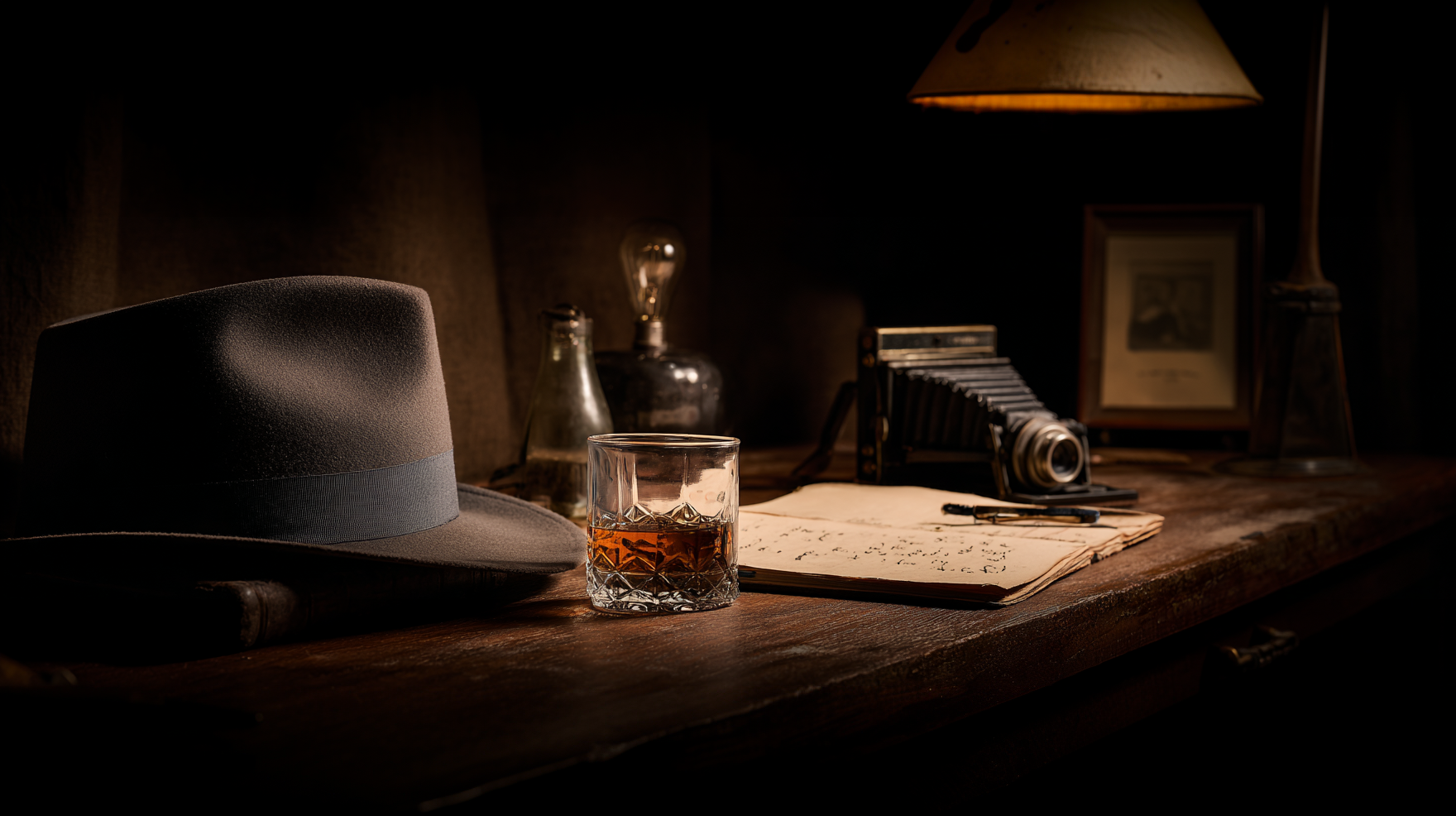
Folks often ask why I like to write about vintage crime. Fair question. Truth is, sometimes I ask myself the same thing. Thinking back—and I’m probably aging myself by saying this—I grew up watching those old black-and-white detective movies on TV. You know, film noir. The ones with frosted-glass doors, ceiling fans that never worked, and heroes who drank too much and cared too hard. Hmm-hmph. I sure loved those stories.
Don’t get me wrong. I don’t just respect modern forensics; I admire it. Am grateful for it. But when it comes to a good crime story—all those shiny gadgets, the lab coats, the certainty—they never hit as hard as plain old, common-sense detective work. The kind that runs on intuition, coffee, and a good pair of shoes.
It’s not that I think detectives today have it easy. They don’t. But back then? They had it rough. No databases. No cameras on every corner. Just grit, luck, and whatever you could fit in your pockets.
And crime? Baby it was out there. In your face. Chicago in the twenties: bootlegging, gang wars, politicians on the take. New York in the thirties: desperation dressed in silk, Mama’s Big Apple rotten to the core. L.A. in the forties: Hollywood, gangsters and cover-ups. Detroit, New Orleans and Miami—they earned their mention too. Gambling here; smuggling there; crooked everywhere. Every decade had its city of sin—running on vice and nerve. The map changed, but the racket didn’t.
Be the first to know. Or at least pretend you were.
Join the Noir Circle
Crimes, clues, and the occasional confession—right to your inbox.
Folks—even the ones who should know better—like to talk about the good ole days. But those days were never all good. Or neat. And they sure weren’t quiet. The only thing neat was how the hardcore preferred their whiskey. And the only things quiet were the still-warm dead and the terrified witnesses desperate to stay alive.
“Ladies” wore gloves because they were fashionable. “Dames” wore them to keep their hands clean. No gunpowder residue. No fingerprints. Lipstick was fine—nobody knew about DNA, and no jury would’ve sent you up just because the shade you wore matched the kiss on the victim’s forehead. Of course, juries back then weren’t too eager to send a skirt up the river anyway—especially if it meant a date with Old Sparky or one of his cousins. Not saying it made it easier for a gal to pull the trigger. But it sure made it harder for our hero to build a case against her.
A good detective just learned to step carefully between the cracks.
The tools of the trade—that’s where it gets interesting. The gadgets weren’t much, but they had heart. Cameras the size of Grandma’s meatloaf—and they smoked just as bad after the flash went off. Fingerprint kits rimmed your cuffs in black. Flashlights burned through batteries faster than whiskey disappears at a wake. Each one had a mood, and none of them were friendly.
What about those old Kodak Vest Pockets? Cute little things. Fit right in the palm of your hand. All you had to do was line up your shot and pop the flash—then spend the next five minutes blinking spots out of your eyes. Later came the flashbulbs. Safer, sure—but no smarter. Everybody knew at least one gumshoe who set off a flash too close to the drapes. Solved the case, burned the evidence.
And those fingerprint kits—little metal tins, neat until you opened them. One puff of powder and you looked like you’d been digging coal. Still, there was something satisfying about it. Watching a ridge pattern appear under your brush felt like coaxing a ghost into the light. You just prayed you didn’t sneeze.
Lighting was hit-or-miss, mostly miss. Those old flashlights could double as a club in a pinch—heavy enough to drop a man, dim enough to miss the clue that mattered. Today, folks have lights on their phones. I guess that’s handy. But the dark talks, if you know how to listen. Back then, detectives had to listen—listen hard. And remember.
Recorders were something else. They weighed as much as your sister’s three-year-old and had twice the tantrums. You’d feed the wire through by hand, hoping it wouldn’t snarl halfway through a confession. Half the time it did. If you played the tape back backward, it sounded like old Satan giving bad advice. And if the perp happened to hear it, he’d say, “There. That’s the proof. The devil made me do it.”
Speaking of proof: no forensics meant no proof when a cop went crooked. Plant a gun, pocket evidence, rough up a kid till he said what you needed him to say—who was gonna prove different? The same shadows that hid the criminals hid the dirty cops. The pressure from the brass, the fat envelope from the mob, that suspect you just knew was guilty but couldn’t nail—every detective faced those temptations with nothing but his own compass to keep him straight. The good ones held tight; the weak ones failed.
So here’s to the old-school sleuths—the gumshoes who worked by instinct, not algorithms. They wore trench coats, not tech. Ran their own game across Harlem’s alleys and Hollywood’s hills.
They didn’t have the luxury of scientific certainty. And they often worked in the dark—because the light didn’t always tell the truth.
They weren’t perfect, but they gave a damn. And in a world turning slick with modern lies, that stubborn streak—analog and unbreakable—might just be the rarest truth of all.
Yours,
Walker
That’s the story. For now.
Join the Noir Circle
Crimes, clues, and the occasional confession—straight to your inbox.
Tales from the shadows. Musings on noir, vintage crime, and the detectives who walked the line — from Harlem to Hollywood. For readers who like their mysteries hard-boiled, their history a little smoky, and their fiction laced with truth.