She gave me almost nothing when it came to sharing her past—but it turned out to be enough.
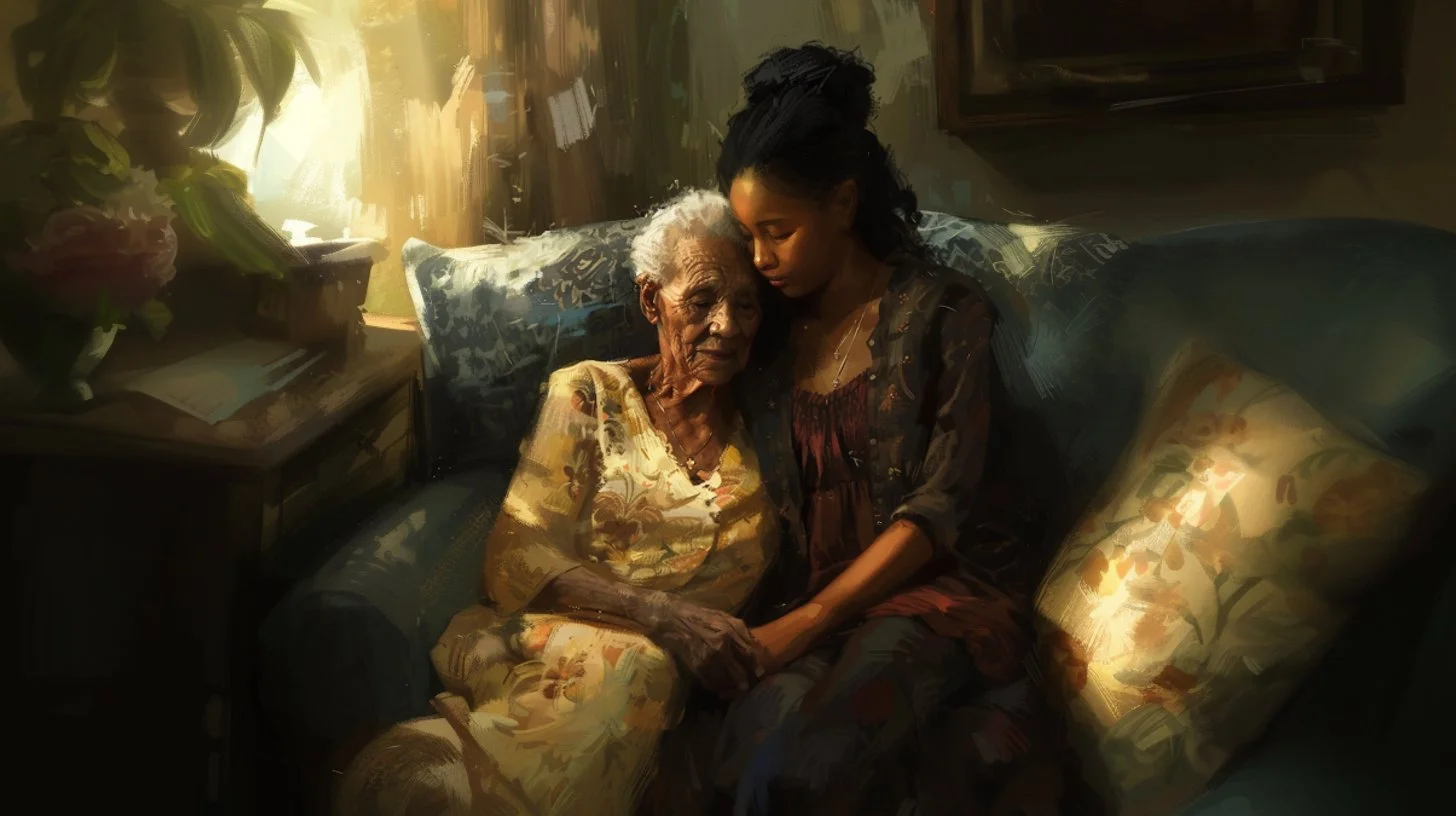
My mother grew up as a sharecropper’s daughter in Virginia. Born in 1917. Grew up during the Depression. Knew hunger. Knew pain. She left home when she was fifteen years old, boarded a Greyhound bus for New York City.
She never went back.
She worked as a maid for rich white folk out on Long Island. Grew older, more tired, met my father, had me. Pretty soon, she found good reason to send him packing. So it ended up being just her and me.
Precocious, I read every book I could lay my hands on. The stories were great, but they weren’t enough. They weren’t mine.
Be the first to know. Or at least pretend you were.
Join the Noir Circle
Crimes, clues, and the occasional confession—right to your inbox.
An only child, I was lonely. I ached for a larger family — brothers and sisters, cousins and aunts, the kind of kitchen-table talk that stitches generations together.
I tried to get my mother to tell me about her life growing up. She’d once said she was one of seven children. (Or was it nine?) Tell me about them, mom. Tell me about your mama and daddy, about your brothers and sisters —
Her answer was always the same.
“Let the dead bury the dead.”
She’d say that even when we were talking about the living.
Every now and then, she’d break down and share something small. A fragment. A name. But the memory was always sad or bitter or both, and then she’d go quiet again. So I learned to read her silence the way a detective reads a crime scene — noticing what was missing, inferring the shape of what she couldn’t say.
I still wish she’d talked to me.
I think I would’ve been stronger. I think I wouldn’t carry this nostalgia for a past I barely know. It’s a wound that never quite heals, wanting roots you can’t reach.
But here’s what I’ve learned about wounds: sometimes they make you stronger anyway.
When things get hard — and Lord knows they get hard — I don’t have a big family to lean on. Never did. But I can think about that fifteen-year-old girl who boarded the bus in Appomattox. The one who looked at everything she knew and decided she could survive without it. The one who never went back, never asked family for help, just kept putting one foot in front of the other, all the way to a life she built from scratch.
Black History Month. It makes me think about the stories that almost got lost. The ones that live in silences and fragments. The ones you have to piece together like evidence because nobody wrote them down — or nobody could bear to tell them.
History isn’t just what gets recorded. It’s what gets carried — in the set of a woman’s jaw, in the things she won’t explain, in the way she taught you to keep moving forward even when she couldn’t tell you why.
Black History Month. I love the sound of those words. They hold so much pain—and so much love. So much determination. An insistence on remembering even when the powers-that-be demand that you forget.
These days, a lot of people are in the business of intentional forgetting. So busy cheating others, they don’t realize they’re cheating themselves. They think looking at the past will make them feel ashamed — or their perceived enemies proud. But denial just carries the pain into the present. You can’t be strong if your sense of worth depends on another’s devaluation. You can’t move forward if you don’t know where you’ve been.
Then there are those among us who want to forget our own history — who think that knowing where we’ve been, what our people have withstood, will somehow hold us back. But it’s the forgetting that weakens us. The denial of generational pain — and generational strength — that dooms us to repeating mistakes and underestimating our ability to survive.
Black History Month. I’m not thinking about heroes on pedestals or displays or speeches.
I’m thinking about a fifteen-year-old girl who in 1932 got on a bus.
I’m thinking about her determination. Her grit. Her refusal to be kept down, held back.
I’m thinking about how she gave me almost nothing when it came to sharing her past — and how that almost nothing turned out to be enough to stand on.
That’s what history is, when you strip away the displays and the speeches.
It’s what got handed down.
It’s what you carry.
It’s the wound that somehow makes you strong.
That’s the only history my mother gave me.
But it’s enough.
It has to be.
It is.
—Walker